

Creating ebooks, whitepapers, infographics, and other resourceful content pieces has been a staple for marketers over the years. These assets are indispensable for generating leads, educating the audience, and achieving various KPIs.
However, it has been a while since people started dividing their attention among the massive amount of content available in various formats. That’s when engagement became key to understanding how relevant these assets are.
Marketers have found themselves in a paradigm shift: how to provide the value they want and keep the audience engaged at the same time?
Interactive elements have been a great option to help professionals with this question. A recent study by Mediafly shows that interactive content engages 52.6% more than static pieces and this data must be taken into consideration when planning a strategy.
I know that a common concern for marketers regarding interactivity is its perceived difficulty in application, requiring coding skills and often lacking in-house expertise. Well, not anymore.
In this article, you will learn that using coding to create interactive and engaging experiences is not needed anymore. You will also learn how to apply it to each stage of your marketing funnel and see great examples to get inspired.
By creating assets like quizzes, calculators, and assessments, it is possible to work out another need of audiences: personalization. Once again, this is an important point when it comes to engagement, convincement, and experience.
The number of interactive formats that you can apply to your strategy is immense, it all depends on your creativity. In addition, they can be created to support businesses on different objectives through the buyer’s journey, from awareness to conversion, from visibility to revenue.
Let’s see how.
How to apply interactivity at each stage of the marketing funnel?
Awareness stage
At this stage, the reader may not know they have a pain point or need your solutions yet. According to Mediafly, interactive content delivers 94% higher content views when compared to static pieces, so this is a good opportunity to generate brand awareness.
An interactive ebook about their niche can be a good opportunity to introduce your brand and expose it as an authority on that subject. This is also an excellent opportunity to convert readers into leads and collect relevant first-party data as they interact with the ebook.
Webinars also provide a great opportunity to capture people’s attention, address basic questions, and connect with the audience. At Rock Content, we have the Jam Sessions and we use interactive pages as a content gallery and also to broadcast the live webinars.

You can also convert people into leads and collect their feedback by gating or adding CTAs and other interactive elements inside these pages.
Sometimes people get a little nervous about changing up their standard assets, but honestly, even small tweaks—like embedding polls or short forms—can make a difference. It all boils down to encouraging a two-way street instead of a flat monologue. When someone clicks through to see results or gets a custom report, you’ve just made your brand memorable in a sea of static PDFs. Plus, those little pieces of data, volunteered by actual humans, help you understand your audience in real time—not just what they download, but actually what they care about right now. Call it micro-personalization, or just paying attention; either way, it works better than guessing from a spreadsheet.
One thing I’ve noticed over the past year is a kind of fatigue with the old “gate your ebook and cross your fingers” approach. People want a sneak peek, or at least something interactive to show them you’re not just after their email address. When we opened up a section of our guides as interactive previews on our own site, the lift in both engagement and honest feedback was hard to ignore. It’s funny—sometimes “giving away” some content up front actually leads to more leads, not fewer. People respect transparency and effort, and they’ll give back more data or attention if you give them a reason to stick around.
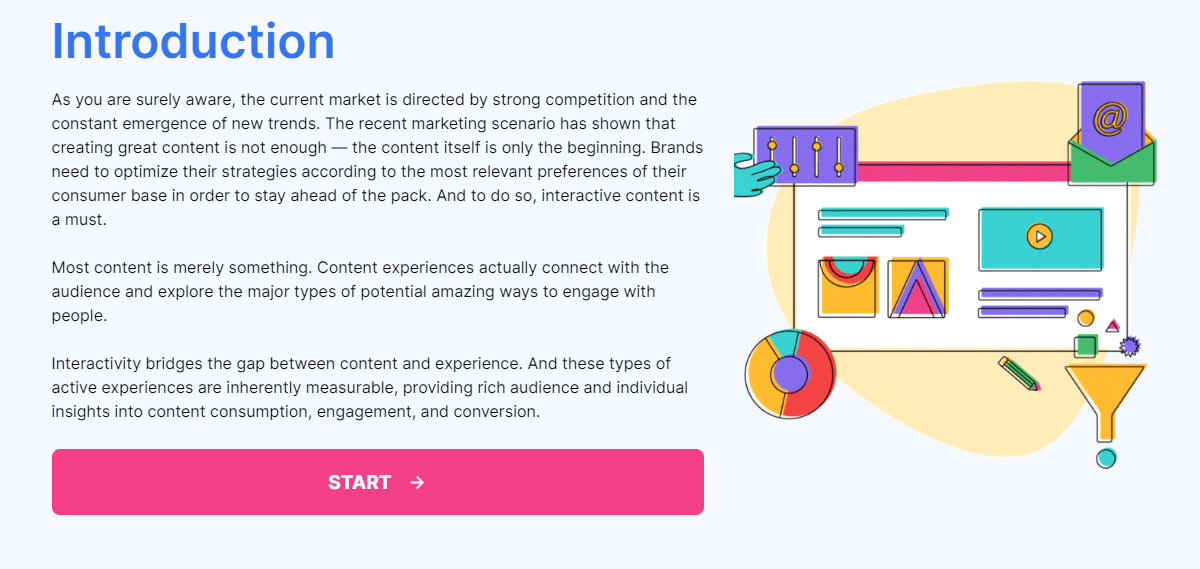
As an example, you can check out our interactive ebook: The Ultimate Guide for Interactive Content.
Consideration stage
At this point, people are aware of their need for a solution and begin evaluating potential ways to address their problems. While interactive ebooks can provide more specific information, exploring other formats is also worthwhile.
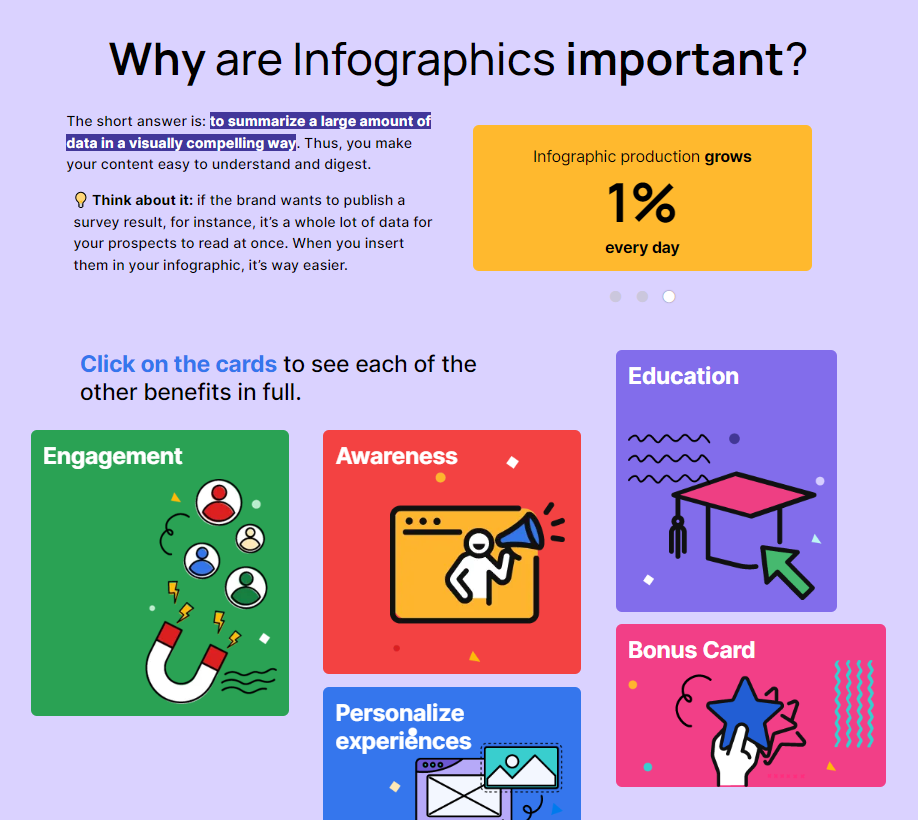
Interactive infographics offer the perfect way to simplify complex information—an essential aspect during the consideration stage. They are also effective in presenting data and numbers, providing valuable support to your narratives, and aiding visitors in making data-driven decisions.
Quizzes and calculators play a significant role in this stage as well. Visitors can provide detailed answers, and receive personalized recommendations and results, enhancing their overall experience and bringing your solutions closer to them.
Last but not least, the formats mentioned above are also great sources of information, allowing you to collect first-party data based on their inputs. This enables marketing and sales teams to personalize their approach to the lead, thereby increasing the chances of conducting business.
You can learn more about interactive infographics by clicking here.
Decision stage
At this stage, the visitor is already familiar with their challenges, your products, and services. They just need assurance that your business is precisely what they are seeking.
An interactive ebook might seem too superficial for these contacts. However, an interactive whitepaper, with a structure similar to interactive ebooks, provides more in-depth and technical information about your subject. It can serve as a turning point to help the person move forward with the purchase.
Interactive infographics are useful for making comparisons, allowing you to highlight your benefits against competitors. Calculators are also a viable option; you can offer a discount calculator or even calculate the ROI that your contact will gain by purchasing your solution.
During the decision stage, success cases, case studies, and customer testimonials are crucial. Delivering these assets through an interactive experience captivates the reader and adds more credibility to your narratives.
Click here to see the example of an interactive calculator.
How to create interactive experiences?
The examples we provided above from Rock Content were also made using our own interactive content platform: Ion.
With Ion, you can create infinite types of interactive experiences from scratch or using the templates from our Quickstart Gallery. The best part is that you can do it all with no need for coding.
As mentioned before, it is a good chance to generate results from awareness to conversions and empower sales teams with the information provided as the visitor consumes the content.