

Although the concept of AI has been around for a long time, it has never felt more attainable than in the last few years. Businesses of all shapes and sizes are utilizing machine learning programs, sometimes without even realizing it.
One of the most widely touted AI programs, though, is ChatGPT. This software is a chatbot (nothing new), but what makes it remarkable is that it can use its vast knowledge and resource bank to generate content on the fly.
This ability to churn out content based on a prompt has changed the game, for better or worse. For marketers, though, it begs the question – can you use ChatGPT for search engine optimization? And, if so, would you want to? Let’s dive into the worlds of AI and SEO.
Is ChatGPT Content Good for SEO?
When trying to answer the question regarding whether content generated by ChatGPT is “good” for SEO, the definitive answer is “maybe.” Since the operating word is “good,” it’s hard to pin down whether AI content is similar to or better than text written by a human. There are a few variables at play, so let’s break them down:
Value for Users
Search engines like Google focus on providing as much value to the user as possible. If ChatGPT content is highly valuable, then it would be good for SEO. However, if it’s just keyword-stuffed filler, it would tank in the rankings.
Expert Authority
One of the primary challenges of using AI software is that it has a relatively limited scope.
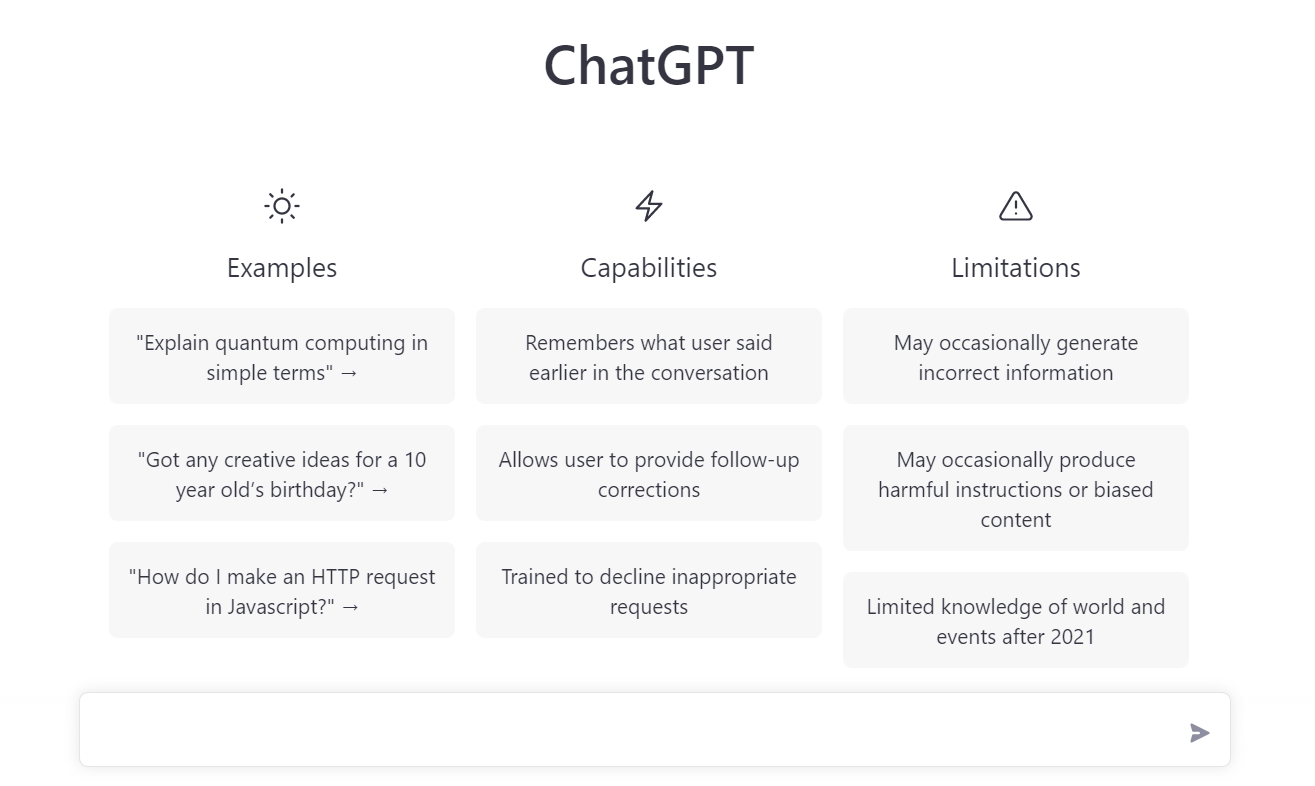
“True” AI doesn’t exist yet, meaning programs like ChatGPT can only generate content based on what it has learned. Also, its learning stopped in 2021, so it will become obsolete eventually.
Natural Language
While text written by programs like ChatGPT is far better than AI programs of the past, they’re not infallible.
Since a machine may not understand all the nuances of writing, it could generate content that seems stilted or awkward, making it less valuable for the reader and less valuable for SEO.
Overall, whether ChatGPT is good for SEO depends on the person using it.
If someone is just asking the program to generate SEO-friendly content, they’ll likely receive mediocre text that likely won’t outrank the top spot for a particular keyword.
Can ChatGPT Content Rank on Google?
Technically speaking, yes, ChatGPT content can rank on Google. Since Google doesn’t explicitly forbid AI-generated content, it’s entirely possible for a post or article written by ChatGPT to rank highly in search results.
However, regardless of how the content was created, Google will still rank it according to its complex algorithm. So, the piece will still have to be relevant and valuable for the reader. As always, keyword-stuffed content will be penalized, as will texts with unnatural or stilted language.
How Will ChatGPT Affect SEO?
Since ChatGPT is still so new in the public consciousness, it’s hard to say how it will evolve over time. Right now, there’s a lot of buzz surrounding AI content, but will it dissipate in a few years, or will it become ingrained in the way we do things online?
There’s been a noticeable pattern lately—companies flooding their blogs and websites with AI-generated articles just to keep up with the competition. You might notice that some of these posts sound a little “off,” or maybe a bit too generic, which can hurt a brand’s credibility. It’s almost like a race to populate as many pages as possible, even if the value sort of gets lost along the way. Readers are quick to catch on if something reads like it was spat out by a machine, so there’s a risk that trust in brands (and their online advice) could take a hit if they lean too heavily on auto-generated content. That’s probably not what anyone intended when AI tools became popular with marketers, but here we are.
Another change brewing is in how smaller businesses approach content. Not everyone has the budget for a writing team, so AI might seem like a silver bullet—type a few prompts, get a few paragraphs, and call it a day. But it’s not that simple. Smart business owners are starting to realize they can’t just copy-paste whatever comes out of ChatGPT and hope for the best. Editing, fact-checking, and reworking the text is pretty much non-negotiable if you actually want people (or Google’s algorithm) to take the content seriously. So while AI is reshaping the process a bit, there’s still no real substitute for some good old-fashioned oversight.
Here are some potential ways that ChatGPT may affect SEO now and in the future:
Segregated Content
As of 2025, Google does not seem to have a bias against AI-generated material.
However, as it becomes more prolific, search engines may update their algorithms to detect AI content and reveal texts created by a computer. That way, users can choose which type of content they prefer.
Mediocre Content Cannabilism
As more AI-generated content is published online, programs like ChatGPT will use that content as a foundation for more texts.
This kind of feedback loop could reduce the overall quality of content online, making it far more noticeable when a piece is generated by an experienced human writer.
Blurred Lines Between “Truth” and Facts
Another substantial problem with AI content is that a computer doesn’t necessarily know the difference between facts and misinformation.
So, software like ChatGPT could use problematic sources as research for its content, leading to incorrect or misleading texts. Without oversight, this type of content could muddy the waters if it starts to rank in search results.
Can ChatGPT Replace Traditional SEO?
If AI programs can be advanced enough to understand the nuances of SEO, they could potentially replace traditional optimization methods.
For example, if ChatGPT starts to understand user intent better, it could possibly create high-value content that will address an individual’s needs regarding a specific topic.
Realistically, though, it’s more likely that ChatGPT can replace most of the technical side of search engine optimization, such as ensuring that each component of a new piece of content uses the right keywords in the right places.
So, human oversight will still be necessary, at least for the foreseeable future.
What Are ChatGPT Prompts for SEO?
Overall, keyword research and outline generation seem to be the most valuable ways to incorporate ChatGPT and other AI programs into SEO content.
These programs can quickly generate ideas based on individual keywords, and they can even pump out keyword-friendly outlines for writers or content creators to fill in with valuable text.
ChatGPT prompts for SEO is an example of this, where the program generates a ton of SEO-friendly prompts to help spur creativity and offer ideas on what kind of content to produce next.
So, if a marketer or content creator is having trouble coming up with ideas, ChatGPT can help immensely.
What are the Downsides of ChatGPT?
In its current form, ChatGPT has several downsides, including:
Inaccuracy
ChatGPT itself has limited knowledge of current events since it stopped “learning” in 2021. So, any content related to anything post-2021 is likely to be wildly inaccurate.
Lack of Nuance
One strategy for marketers to ensure their content ranks highly is to focus on less competitive keywords.
However, AI programs will often come up with keyword ideas that only use the most-searched words, making it virtually impossible to create anything competitive.
Becoming Obsolete By the Minute
Without getting updated regularly, ChatGPT is destined for the bargain bin in a couple of years, especially when talking about SEO content.
Since search engines update constantly, it will be impossible for ChatGPT to keep up with these changes.
What are the Advantages of Using ChatGPT for SEO?
Despite its downsides, ChatGPT and other AI programs can be useful tools for SEO marketers and content creators.
- First, the software makes it easy to develop ideas based on keyword prompts.
- Second, they can generate basic content that creators can use as a foundation for an article or blog post.
Basically, ChatGPT makes it easier for new content creators to launch, and it can streamline the content production process for existing businesses.
However, given its limited (and outdated) scope, these benefits may turn into liabilities in the future for this program specifically.
Is ChatGPT a Threat to Google?
Realistically, ChatGPT is not a threat to Google, especially because the scope of its programming is so limited.
Google is constantly updated and overseen by experts in the field, and it dictates what counts as optimization or not. ChatGPT can be helpful, but it’s nowhere near as nuanced or valuable as Google, especially as it’s not learning new information beyond what users put into it.
That said, Google is creating its own AI chatbot, so the search engine sees the value of using something like ChatGPT to create more engaging interactions with users.
How to Use ChatGPT for SEO
If you’re trying to generate better SEO-friendly content, you can leverage ChatGPT’s programming in a few different ways, such as:
Keyword Generation
While ChatGPT will often focus on top-ranking keywords, you can ask for a longer list (i.e., 25 or 30 keyword ideas) to get more creative and unique responses.
Content Outlines
Once you have suitable keywords, you can ask ChatGPT to generate an outline based on those words. This foundation may require minimal editing, meaning you can have a workable solution in seconds instead of having to generate it yourself.
Basic Content Structure
Because of ChatGPT’s limitations, you should never use it to generate content without oversight.
However, once you have a basic text, it can be easier to just verify the information and edit it to make it more valuable to the reader. As you get used to the software, you may be able to generate SEO content faster and more efficiently.