

Marketing strategies today revolve around content creation, keywords, and search engine optimization.
Undoubtedly these are all essential. Yet, just because you have a lot of content doesn’t mean it’s getting in front of the right audiences.
With so much content online today, you’ll be lucky if they find you at all.
So, instead of relying on luck, you’ll need to promote your content where your potential customers are and find better ways to reach them.
To do this, start by incorporating a plan for content distribution in your content marketing strategy. Together, these two make the dynamic duo.
Learn more about it in this article.
How to Build a Content Distribution Strategy
Creating a content distribution plan might seem daunting, especially for companies that have never focused on distribution or know little about which avenues work for their business.
That’s why it’s vital to follow the steps below to help you create a content distribution strategy that works for your business.
Content strategy is a vital part of marketing, and understanding the basics of content distribution is essential for success.
Examine Your Existing Strategy
First and foremost, you’ll want to examine your current strategy (if there is one) and overhaul any marketing strategies that might not be working for you.
While your sales and marketing team might be hesitant to abandon their current approach, it’s important to be honest as to whether this strategy is truly successful for your company. If not, it’s time to take a step back and look at what needs to be done differently.
For instance, let’s say you run a restaurant and currently advertise only through newspapers or radio.
While this might have worked in the past, it’s not an effective form of content distribution in today’s world where people mainly get their news and ads on social media, local Google ads and even YouTube. To improve your content distribution strategy, you’ll need to start investing in new forms of advertising that align with the way customers consume media today.
Examine your strategy, and see if you’re already using some of these content distribution channels. For instance, you might already have a social media page that has limited posts. Understanding what you have first can help you create a strategy that minimizes your efforts and gets the most out of each tactic.
Use Data Analytics
Content distribution is only a single part of your marketing strategy.
To know how your content is performing and what your audience thinks, you’ll need to invest in data analytics to measure key performance indicators or KPIs.
For instance, let’s say you already have an auto repair website and see lots of customers coming in for an oil change. Are these customers coming in because they saw your website, or was it because of the content you distributed on social media?
To find out, you’ll need to track the number of visits your website gets from each platform, as well as its performance in search engine results pages (SERPs).
Using data analytics for content marketing can help you understand which strategies are working and which ones might need to be changed in order for your content distribution strategy to be effective.
Create Goals for Your Strategy
Once you have your KPIs on hand and understand which strategies are working, it’s time to set goals for your content distribution strategy.
- What success metrics do you want to hit?
- What kind of changes do you want to see?
- How many new customers are you hoping to acquire?
Answering these questions will help you create a plan of action that works best for your business.
Think about short- and long-term goals. For instance, if you have a hair salon, a short-term goal might be gaining more followers on Instagram, while a long-term goal might be increasing the number of customers who come in for a cut.
Having realistic goals will help you better understand a timeline for setting goals and KPIs. If your goal is to bring in more customers, you might want to measure how many people visit your Instagram and then later pay for a cut.
You might want to measure different social media shares and if these shares lead to more customers or website visits.
Experience With Different Content Distribution Tactics
Content distribution can be vastly different from business to business.
While one company might benefit from optimized web content, such as marketing strategists and SEO writers to boost their ranking on SERPs, another might benefit from personalized drip campaigns and tailored e-mails for their content distribution.
There are many content distribution platforms that provide services, such as:
- Sharing content through different social media channels
- Embedding content in blogs or videos
- Creating online content portals and directories
- Distributing press releases to local media outlets
- Using influencers on Instagram, YouTube and Twitter
No matter which tactic you decide to use for your content distribution strategy, it’s important to remember that it takes time for these tactics to become effective.
Monitor your results, adjust your tactics as needed, and be sure to track every move you make with data analytics. You should also explore different venues as needed.
WriterAccess is one of the best content distribution channels that can not only help create content but also help you manage existing content and create content for different industries.
If you need a white paper or an article on a specific topic, WriterAccess can help you find the perfect writer for your content as soon as possible.
Fast turnaround times ensure you can begin your content distribution strategy sooner rather than later!
It’s funny how sometimes the best distribution strategies are hiding right under your nose. You ever post something on a sleepy weekday morning, only to have it flop… but then share at a seemingly random afternoon, and suddenly it blows up? Timing really does matter, and it’s not just a matter of luck. Looking at Google Analytics or a native platform tool can sometimes show you that Wednesdays at 3 p.m. work better for your niche, while weekends are dead zones—not universal, but it happens. So, don’t be afraid to run a few weird tests with posting times or even re-release older, “stale” content that didn’t get its due the first time.
One more little overlooked factor—your team’s bandwidth. There’s such a temptation to chase every new platform as it pops up or replicate competitors’ high-gloss distribution efforts, but unless you have a legion of marketers, that’s exhausting. Instead, take an honest look at the skills you’ve got, and let that guide what’s realistic and worth sustaining. Test a few channels first, then scale up what works (and quietly drop what doesn’t); nobody’s handing out prizes for burnout.
Conduct New Data Analytics
Content distribution is ever-changing, so continually checking your KPIs and making adjustments will keep you ahead of the curve.
New data analytics tools are also becoming available that can help you measure different metrics, such as clicks and views, in real-time.
Having access to this kind of information can help you make adjustments to your content distribution strategy, allow you to know which platforms are working and which ones need to be improved, and it can give you the opportunity to measure your success across multiple channels.
Keep in mind that certain analytics might take months to bring in significant results, but that doesn’t mean you should stop monitoring your KPIs and performance.
Content distribution requires patience and a lot of trial and error. If certain content distribution tactics aren’t working, try something else!
With the right data analytics tools and strategies in place, you can use content distribution to build up your brand, gain more customers and boost your sales.
How to Get Your Content Its Largest Audience: 5 of the Best Content Distribution Tools
Fortunately, today you have options when it comes to content distribution tools to help you get your content out there and reach a larger audience.
Most come with a free or paid version and offer different benefits. Here are five of the best content distribution tools.
1. HubSpot
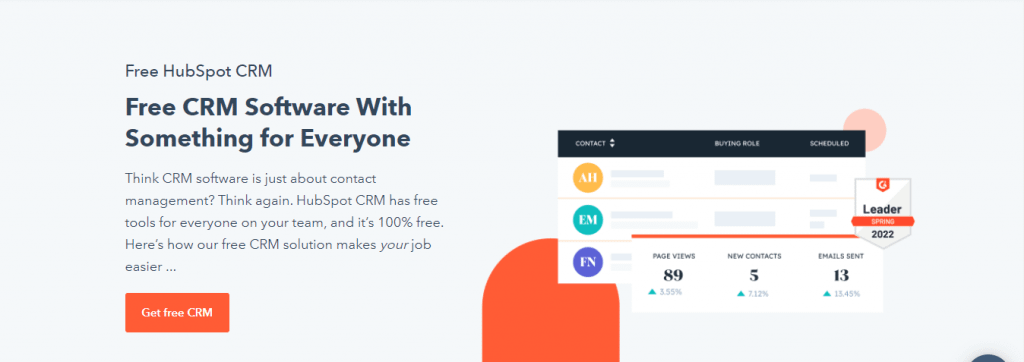
As an all-in-one CRM with its own Marketing Hub, HubSpot provides you with a tool that allows you to schedule, post, and monitor your content on social networks. Other benefits include the ability to learn from your email marketing campaigns.
2. Medium
Medium is a digital publishing platform open to anyone and currently has a built-in audience of over 170 million readers. Topics here cover a wide range, so use it to distribute your content in addition to your blog.

3. HARO
HARO (“Help a Reporter Out”) is an online platform connecting journalists with data sources. It provides a way for you to gain backlinks and press mentions.
Distribute your original research and studies here so that journalists on the platform can find them.
You may also receive queries from journalists for certain types of information. As a result, they may mention your brand, product, or service in an article, providing you with wider exposure and a potentially new audience.

4. AddThis
AddThis is a social sharing tool that provides readers of your content an easy and almost effortless way to share your content without ever having to leave your webpage, email newsletter, or other content type.

5. Mention
Mention is a monitoring tool for social media, providing social listening capabilities as well as publishing. It can show you the level of engagement or impact your content is having and let you listen in for mention of your company name, brand, product, service, or other reference.

Bonus: 4 Content Distribution Strategies to Maximize Exposure
Content distribution strategies are essential for several reasons, including aligning your marketing team and keeping them on the same page, boosting the impact of your content, and creating a benchmark to measure against.
Here are tips on how to strategize and maximize your exposure and reach a larger audience.
1. Include Content Distribution in Your Content Marketing Strategy
When it comes to your content, what you create and how you distribute and share it are two sides of the same coin.
As such, you will want to include content distribution as part of your overall content marketing strategy.
The first step, of course, to any content marketing plan, is to know your audience.
You most likely already researched your target audience and possibly created your buyer personas, both of which will help guide you through the strategy more efficiently.
While planning what content to create, research individual distribution channels.
This step will help you determine what type of content you need to reach your audience and also save you time and resources. Always ask yourself what content type will work best on the channels in which you find your audience.
Once identified, use an editorial calendar or other content governance tool to:
- Ensure you cover all your targeted channels.
- Meet the requirements and deadlines for paid or earned distribution channels.
- Keep your marketing team updated and on the same page.
2. Make the Most of Your Content — Past and Present
To make the most of your content, past and present, start with a content audit to identify potential opportunities.
These opportunities may appear in the form of content that can be republished, repackaged, or repurposed for a different content distribution channel.
Perhaps you have content that received lackluster results during a promotion but now know where to distribute it for better success. For this, you may need to convert the content into another form.
Another strategy is to ride the wave of your most popular content by turning it into different formats and sharing on different channels.
3. Balance Your Chosen Content Distribution Strategies
Balance how you promote different types of content, utilizing any combination of owned, earned, and paid distribution channels.
For example, if you promote your eBook via a paid campaign, follow this up with mentions and promotions on your blog and social media.
Finding a beneficial balance increases your chances of growing your audience and also making the most of your promotional budget.
4. Establish Measurable Goals and KPIs for Your Content Distribution
Before selecting your content distribution channels, define your goals and Key Performance Indicators (KPIs).
With these, you can better determine what channels will fit the best for what you want to achieve.
As for meeting your goals, you may want to experiment with the different channels until you find what works best.
Your KPIs will differ depending on content type, distribution effort, and your promotional strategy.
For example, if one goal or KPI involves increasing lead generation, consider inserting a CTA at the end of your blog post to encourage readers to take action right away. You can also offer a gated eBook to capture leads.
Analyze and measure your results to know when and how to adjust as needed.
Wrap-Up
While a major focus on creating your content is vital to success, so too is the way you choose to distribute that content to ensure it reaches your intended audiences.
Don’t wait for more of your target audience to find you. Instead, go out and find them by utilizing the various owned, earned, and paid distribution channels available today.