

Creating a digital marketing budget often requires a lot of guesswork and best assumptions on how the money will be best spent in your organization, without really knowing if you will receive any ROI.
No one wants to put money towards an activity that doesn’t work, but teams also need a budget to experiment and see what types of initiatives will be successful.
Finding the perfect mix of tried and true budgetary expenses and leaving enough for new ideas is a difficult balance to try and meet, but it’s important that you do your best to avoid overspending.
While there is no method set in stone for how to allocate a budget for digital marketing programs, there are some best practices and steps you can follow.
Check them out below:
Best Practices: How to Allocate a Budget for Digital Marketing
Understanding the best practices for how to allocate a budget for digital marketing activities can be as simple as using the above formula to find the percentage of overall revenue you want to spend on digital tactics.
However, you will likely be required to come up with a more detailed breakdown of spending and activities.
Here are some of the top best practices to keep in mind as you consider how to allocate a budget for digital marketing initiatives.
Use these to guide your planning and strategizing around budgetary matters and set your team and department up for success.
1. Outline Your Sales Funnel
Before diving into the numbers, take some time to step back and look at the big picture of your digital marketing funnel.
What steps along the process are important touchpoints?
Knowing how customers find you and what they need to understand about the brand before they convert helps you know what activities are priorities to invest in.
2. List Your Operational Costs
Operational costs are non-negotiable in a budget. These costs need to be taken care of and should be set up first so you know how much budget is available for other activities.
Operational costs can include website hosting, SaaS subscriptions, platform costs, or other taxes and fees.
3. Review Last Year’s or Quarter’s Results
One final set-up task you’ll want to do is look into the metrics and reports from previous quarters and years.
Were the campaigns successful? Did you reach goals or receive an ROI for initiatives?
If you know what worked and what didn’t, you can start to add or eliminate specific activities.
It’s honestly easy to turn a blind eye and just recycle old strategies, but the numbers don’t lie — if something flopped last year, no point in throwing more money at it just because it feels familiar. Plus, reflecting on what didn’t work sometimes opens up spots to try something less conventional, maybe even fun. Those end-of-year reports might feel like homework, but they’re pretty useful if you’re tired of guessing where the budget actually went.
On the other hand, if you notice certain efforts always end up on the “win” list, consider doubling down—maybe even reallocating resources mid-cycle if something unexpectedly takes off. Reacting quickly isn’t always easy (corporate gears turn slow, we know), but a good post-mortem doesn’t lie. Learn from your outliers, both good and bad, since digital marketing barely sits still for a full quarter these days.
4. List Your Goals
Knowing your goals for the year is crucial to allocating a budget for different activities.
What do you want to achieve, and how much revenue do you need to bring in? Are you looking for leads, conversions, or sales?
Having goals in place helps you understand which types of activities are most beneficial for your budget.
5. Drill Down to the Details
After setting your goals, it’s time to drill down into the details.
How do you want to achieve those set goals? What types of activities have proven or do you believe are going to be the best ways to go about reaching your goals?
Detailing out your marketing plan gives you direction on how to allocate a budget.
6. Select the Best Channels for Your Business
There are many different types of channels that you can use for your marketing initiatives, but not all brands need to have an active presence in each channel.
Pick what channels are the best fits for your business and look at the costs associated with operating in each channel.
7. Determine the Cost of Marketing Activities
Once you know which channels you want to focus on, take a look at the costs of marketing activities within those channels.
Do you want to grow on social media? Then how much does it cost to run ads and promote posts? Make sure your marketing activities fit into your set goals.
8. Scope Out the Competition
Your competitors can be a great resource when it comes to determining how to allocate a budget for digital marketing.
What methods of marketing are they investing in? How do those methods help them gain a bigger audience and close more sales?
Examine their marketing and advertising strategies to help you know what channels and campaigns work in the industry.
9. Create Your Marketing Plan
With all the preplanning and research out of the way, it’s now time to actually create your marketing plan.
Whether you are planning for the year or for a quarter, build out each of your initiatives based on the goals that you have, the tools you’ll need to achieve those goals and the channels you need to focus on to reach your audiences.
10. Estimate Your Budget
Once your marketing plan is built, you need to go estimate the cost for each activity.
Take a look at what is required to get a reasonable ROI and then an exceptional ROI. Estimate as close to the dollar amount as you can for every step of the plan and finalize your budget.
11. Make Every Decision Based on Data
You’ll likely be required to present your budget to upper management or leadership in your organization. That’s why it’s important to have clear data to back up every decision.
Don’t just say that you think it will cost a certain amount to run ads — have research and studies and past data to show exactly how much a successful ad campaign costs.
This helps create trust in your plan and your leadership skills.
12. Measure Results
After your budget is approved, you still need to monitor your spending closely and look at the results you are getting.
Were you off in any estimation? What was the reasoning behind the miscalculation?
Use the results going forward into next year’s budget, and help create a system that gives you the best budget allocation possible.
Prioritize Budget for Content Marketing
Once you’ve figured out what your digital marketing budget will be, a large portion of that should be dedicated to content.
Anywhere between 25-30% of your digital marketing budget should go to content creation efforts.
Without a heavy investment in content marketing, including social media and SEO, it will be nearly impossible to attract your target audience’s attention and generate leads.
One way to get the most out of your content investment is to outsource your content creation.
Rather than hiring someone in-house and paying them a full salary and benefits, you can hire freelancers who have content creation experience on a platform like WriterAccess.
You can get a free 14-day trial to test the platform before you invest your content marketing budget.
Invest in Digital Products
Your marketing budget also needs to be allocated to technology solutions and digital products.
You need to have the right platform to accurately manage digital marketing strategies and collect essential data for analysis.
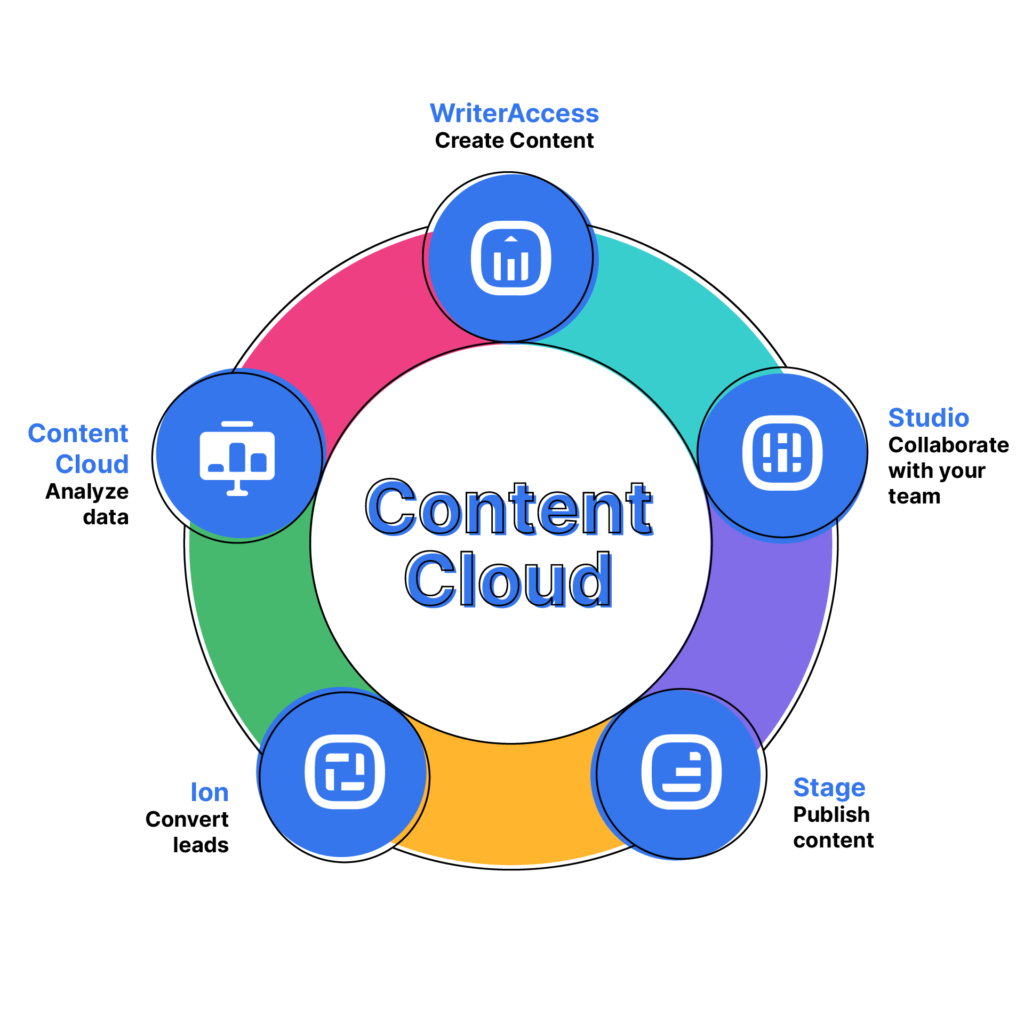
To save money and protect your budget, it is helpful to find a digital solution that covers a lot of ground — for example, Rock Content’s Content Cloud.
This all-in-one package includes our individual offerings: WriterAccess, Ion, Stage, and Studio.
WriterAccess will help you scale up high-quality content production.
Ion will allow you to create interactive content without coding.
Stage will handle all the tech involved in hosting your WordPress website.
Finally, Studio will facilitate your project management.
This package can take care of nearly all of your content needs, so click on the link to learn more.
Budget Calculation Tools
Trying to calculate a budget without the help of technology can be difficult. Here are some tools that can facilitate the process.
1. Google Sheets
The simplest tool out there is Google Sheets or Excel, where you can use formulas, plan out your budget, and share it with your team.
2. FreeAgent
This tool is a great option for small businesses that handle their own finances in-house. It helps with managing expenses, statements, taxes, and invoices.
3. Allocadia
Allocadia is a tool that helps you plan your budget and collaborate with team members on the best ways to allocate your marketing dollars.
4. HubSpot Templates
When you just need a guide rather than a complete budgeting solution, HubSpot Templates is a great choice. You can download free templates to help plan your budget for your digital marketing goals.
5. Knowlium
This tool can create budget plans for you with the use of a user-friendly drag-and-drop interface and a detailed financial dashboard.
6. Hive9
This tool helps you allocate your budget strategically and plan for potential “what-if” scenarios that could disrupt your original plans.
7. Billdu
Billdu is a budgeting and financial tool that simplifies expense tracking and invoice management for small businesses. It’s user-friendly and helps keep financial records organized and accessible.
Wrap Up
Knowing how to allocate a budget for digital marketing programs is a key component of being a great leader and setting your marketing teams up for success.
Without a balanced budget that your teams can work with, you’ll find yourself struggling to reach any goals you have set for the quarter or the year and risk overspending.
Planning a budget requires you to follow best practices to satisfy both upper management and your employees.
It helps to have digital tools that can give you additional support as you create a yearly or quarterly budget.